

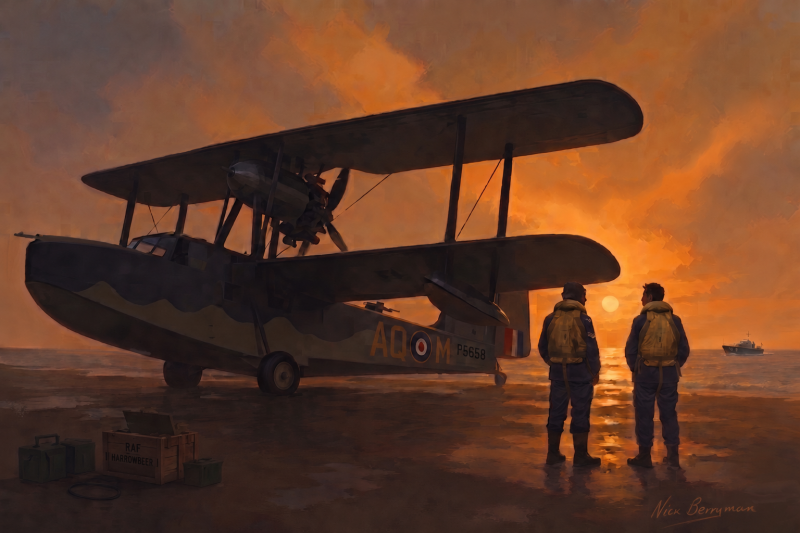
No. 276 Squadron RAF formed at RAF Harrowbeer, Devon on 21 October 1941 as an air-sea rescue unit, equipped with the Lysander and Walrus. The Warmwell detachment had existed since May 1941 under No. 10 Group, becoming 'A' Flight when the squadron formed.
The squadron covered the western English Channel and Bristol Channel. Lysanders spotted downed aircrew, Walruses landed to retrieve them, Defiants and later Spitfires replaced the Lysanders, and Ansons dropped dinghies. Warmwell served as a continuous detachment from October 1941 through April 1944.
In 1943, the Artist's father, Flt Lt Nick Berryman RAFVR was a pilot on 276 Sqn. The aircraft in this picture, AQ-M, was his favourite.
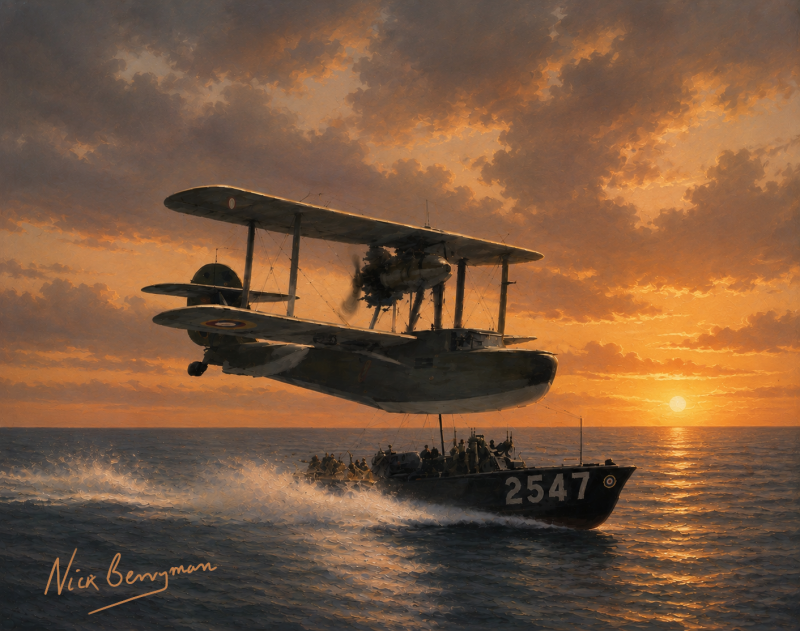
The RAF ASR system had three interlocking parts. Shore-based ASR launches — fast boats of the RAF Marine Branch — handled close coastal recovery with speed, but had limited range. The Supermarine Walrus flying boat covered the gaps: it could search wide areas, land on open water, and pick up survivors directly. If sea conditions prevented it taking off again, it would hold position and radio for the launches to come to it. Tying both together was a dedicated rescue coordination centre (under Group 16, later 19 Group), which received distress calls, plotted positions, and scrambled both assets simultaneously — each doing what it did best.
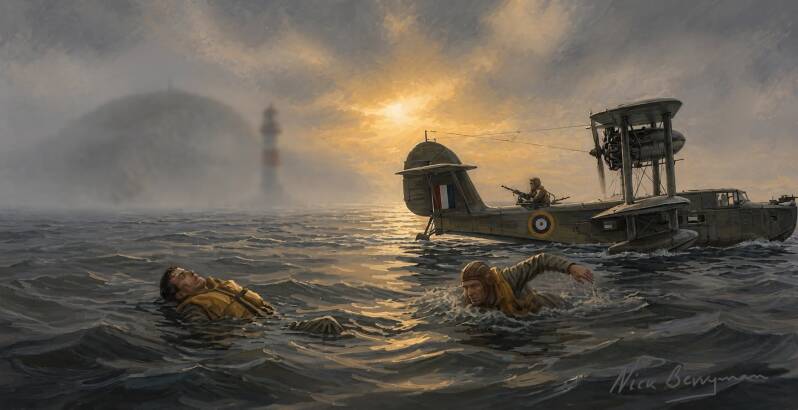
On a cold April morning, Flying Officer Nick Berryman RAFVR and the Walrus crew reached the search area to find a downed Australian airman floating alone in a heavy sea, no dinghy in sight. His father spotted him first from the front hatch, threw a line, and when the man didn't respond, went over the side without hesitation — taking a crack to the head from the wing float as he went.
In the water, he inflated both their life jackets and fought to remove the airman's parachute harness, which was dragging him under. All the while the Walrus circled uselessly in the distance, its crew unable to see the two men in the tumbling waves. Nick raised his arms and shouted until they finally spotted him.
What followed took everything he had. Twice the Walrus came at them, twice he grabbed the aircraft and was dragged underwater until his lungs gave out and he had to let go. On the second attempt, crewman Frisby hauled him bodily through the rear hatch with what Nick later described as the desperate strength of a man running out of options. He fell inside and remembered nothing more — only the cold, and the airframe shaking around him at about the same rate he was shivering.
Frisby told him afterwards that the Australian was dead.