

Tangmere
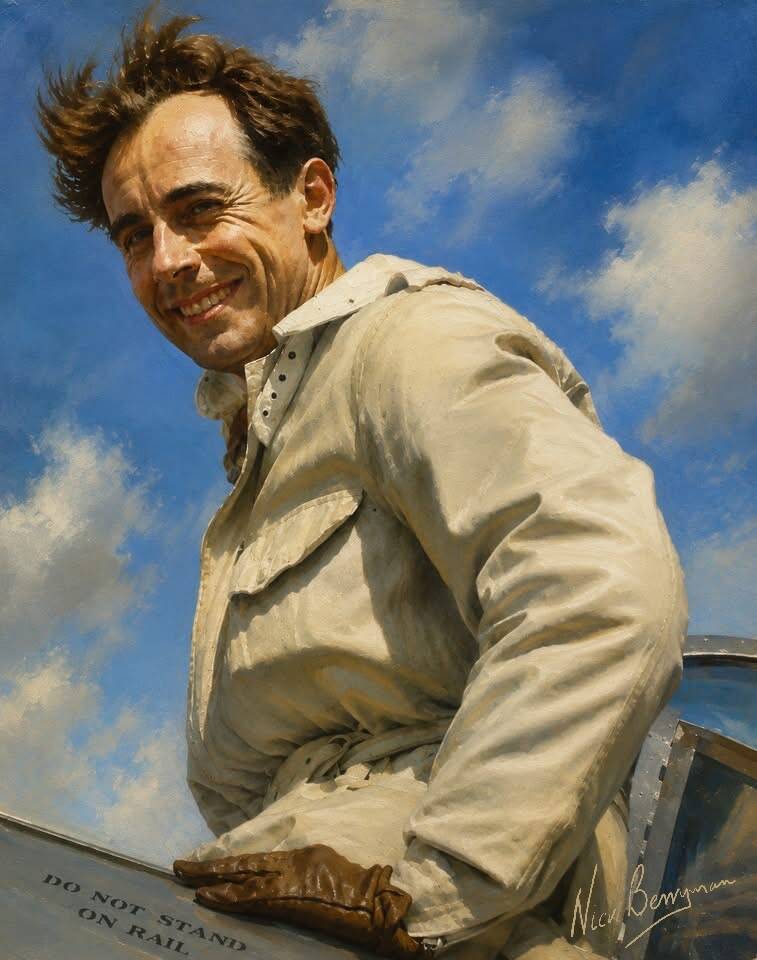
Neville Duke was one of Britain's most celebrated fighter pilots, with 27 aerial victories to his name from wartime service in North Africa and Italy. On 7 September 1953 he flew a specially painted red Hawker Hunter over the Sussex coast near Tangmere, completing the measured kilometre runs that gave him a new world air speed record of 727.6 mph. The achievement caught the public imagination — Duke was already a national hero, and the sleek red Hunter became one of the most recognisable aircraft of the postwar era. The record cemented Tangmere's place in British aviation history beyond its wartime fame.
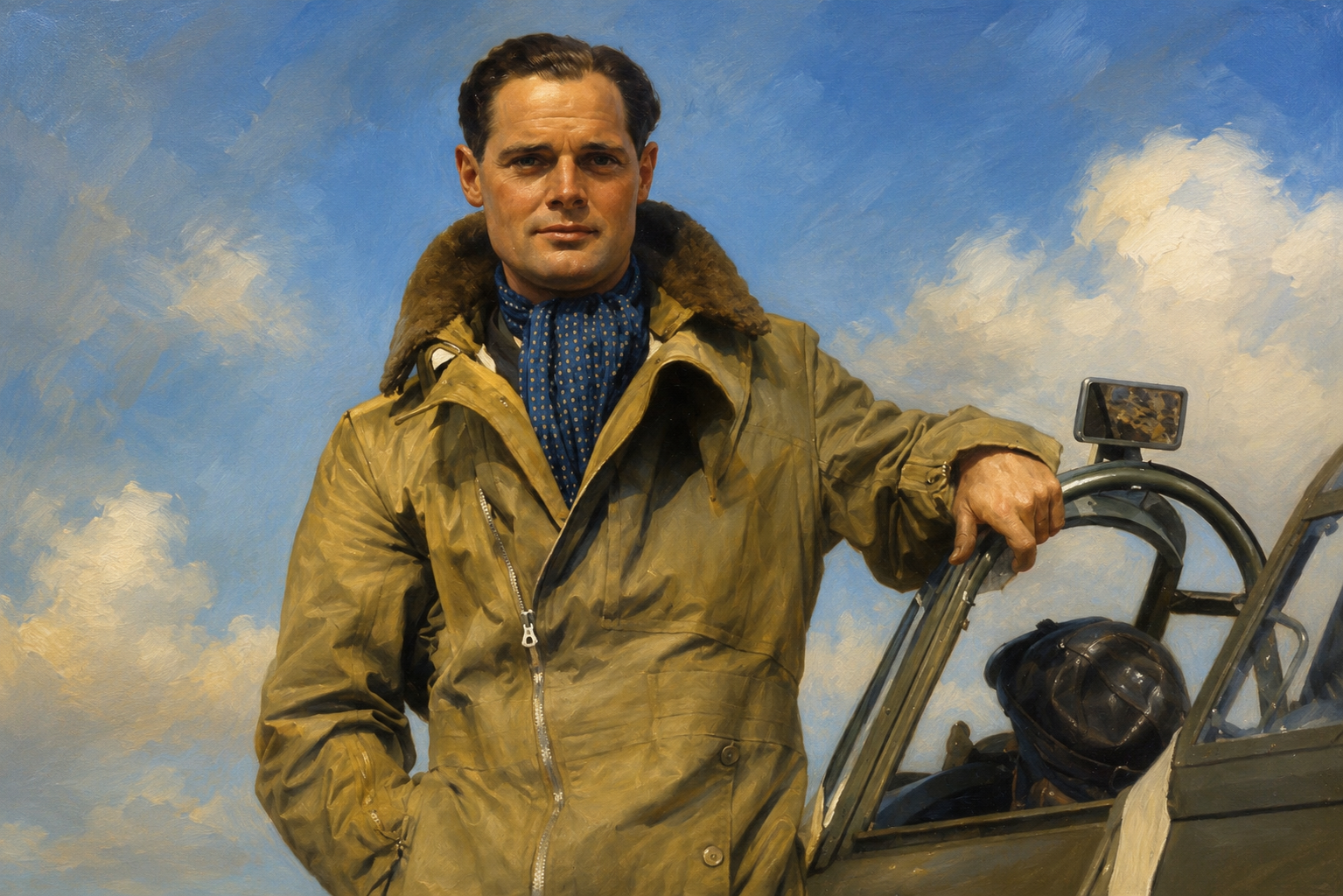
Douglas Bader commanded the Tangmere Wing from RAF Tangmere in 1941. A double amputee who had lost both legs in a flying accident before the war, he became one of Britain's most celebrated fighter leaders. From Tangmere he led large Spitfire formations on offensive sweeps over occupied France, taking the air war back to the Luftwaffe after the Battle of Britain.
On 9 August 1941, while leading a mission over northern France, Bader's Spitfire was lost during combat near St Omer. He parachuted to safety but was captured and spent the remainder of the war as a prisoner, becoming renowned for his repeated escape attempts.
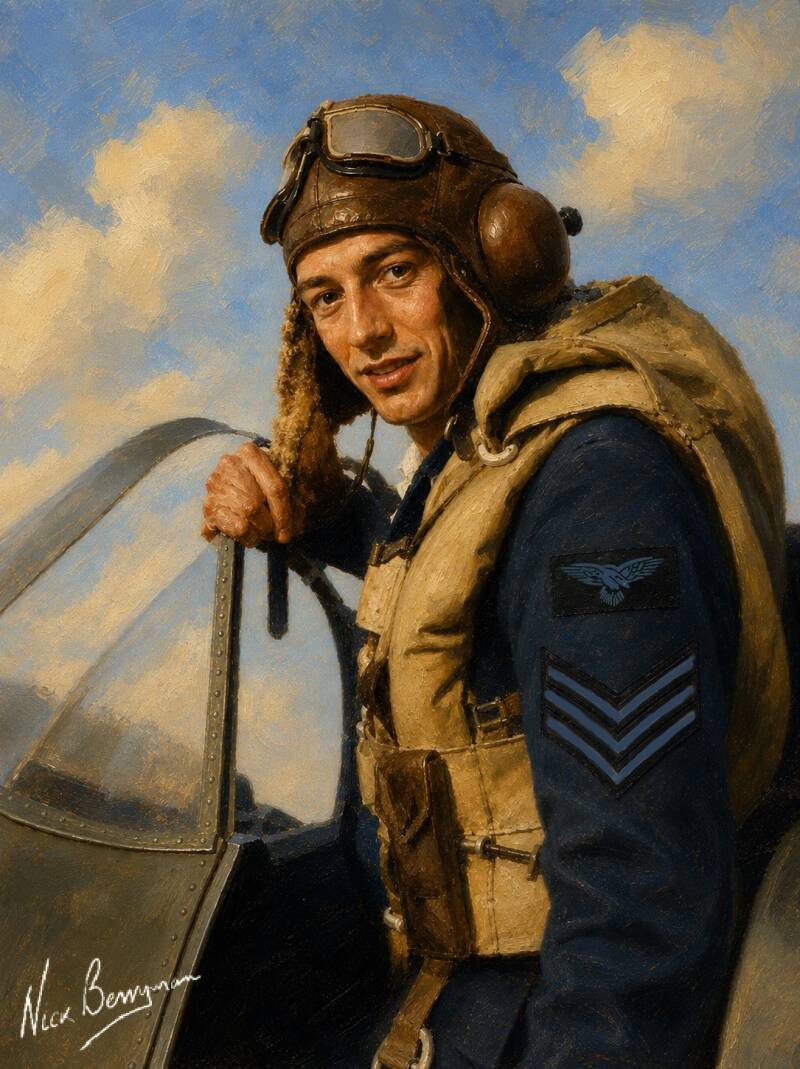
Alan Smith was born in South Shields in 1917 and left school at fourteen after his father, a merchant navy captain, was lost at sea. He joined the RAF Volunteer Reserve, trained as a pilot, and arrived at 616 Squadron as a sergeant pilot in January 1941 when the squadron moved to Tangmere.
Bader selected Smith as his wingman, with his only comment being "God help you if you let any Hun get on my tail." Johnnie Johnson later described him as "leech-like, and a perfect number two who never lost sight of his leader."
On 9 August 1941, Smith was away in London buying his new officer's uniform and was therefore unable to fly — the day Bader was shot down and captured.
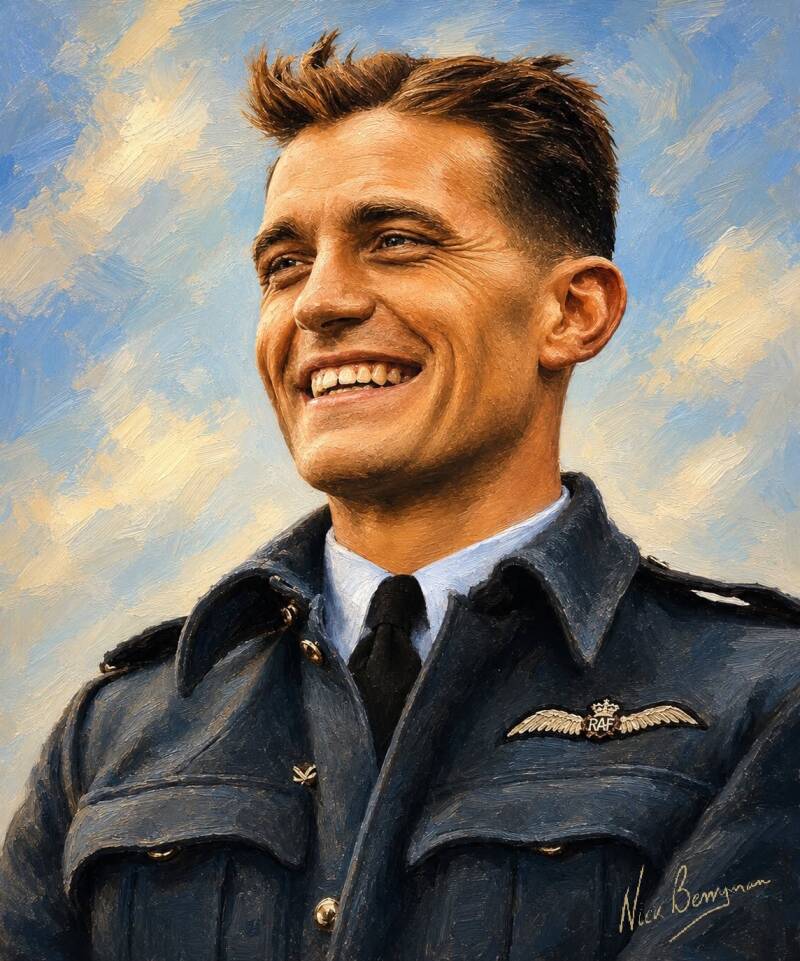
James “Johnnie” Johnson was the RAF’s highest-scoring fighter ace of the Second World War, credited with 38 confirmed victories, all against German aircraft. Flying the Spitfire from RAF Tangmere during offensive operations over occupied France, he became renowned for his exceptional flying skill, tactical awareness, and calm leadership. Admired by those who served under him, Johnson combined aggression in combat with careful judgement. Unlike many leading fighter aces, he survived the war and continued a distinguished RAF career. His memoir, Wing Leader (1956), remains one of the most respected and insightful accounts of fighter combat ever written.
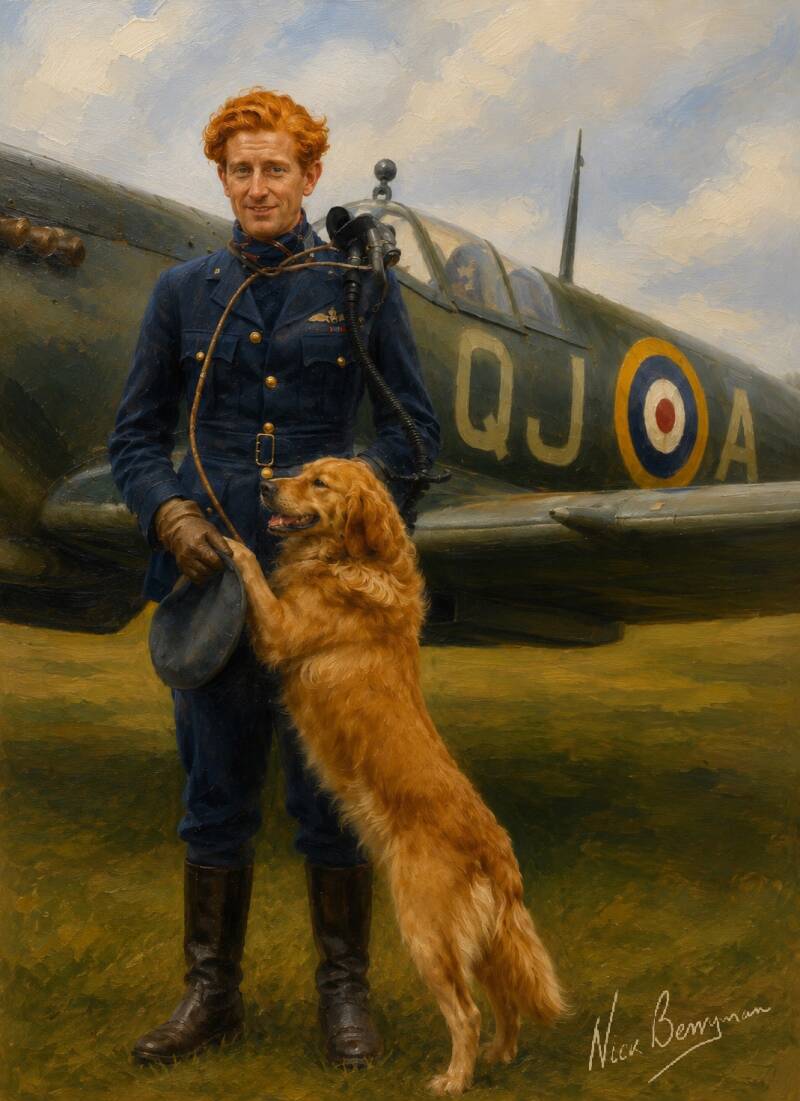
Hugh 'Cocky' Dundas arrived at RAF Tangmere in early 1941 with No. 616 Squadron, part of the Tangmere Wing under the charismatic Wing Commander Douglas Bader. Tall, red-haired and just twenty, he had already been shot down during the Battle of Britain but had recovered and returned to operational flying.
At Tangmere, Dundas earned selection to fly in Bader's personal four-aircraft section alongside Johnnie Johnson and Alan Smith, using the callsign 'Dogsbody' — a mark of real distinction. Through the summer of 1941 the Wing flew aggressive sweeps across the Channel, duelling with the Luftwaffe's elite JG26 over northern France.
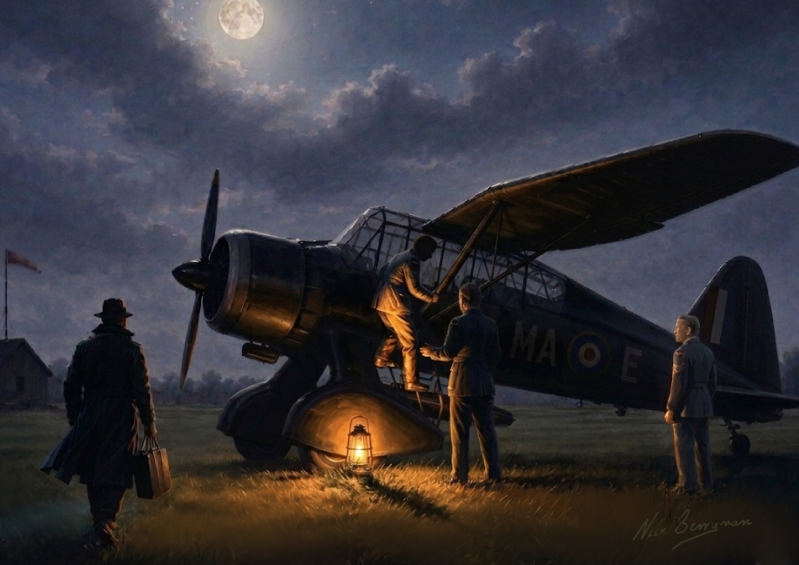
At Tangmere during the Second World War, the Westland Lysander became famous for its clandestine missions supporting resistance networks in occupied Europe. Flying mainly at night, Lysanders carried agents of the Special Operations Executive (SOE), intelligence personnel, and occasionally escaped airmen to and from isolated fields in France. Their exceptional short take-off and landing capability allowed operations from tiny, improvised strips. Crews navigated across the Channel in darkness, often alone and unarmed. These hazardous flights helped sustain resistance activities and gather vital intelligence for the Allied war effort.
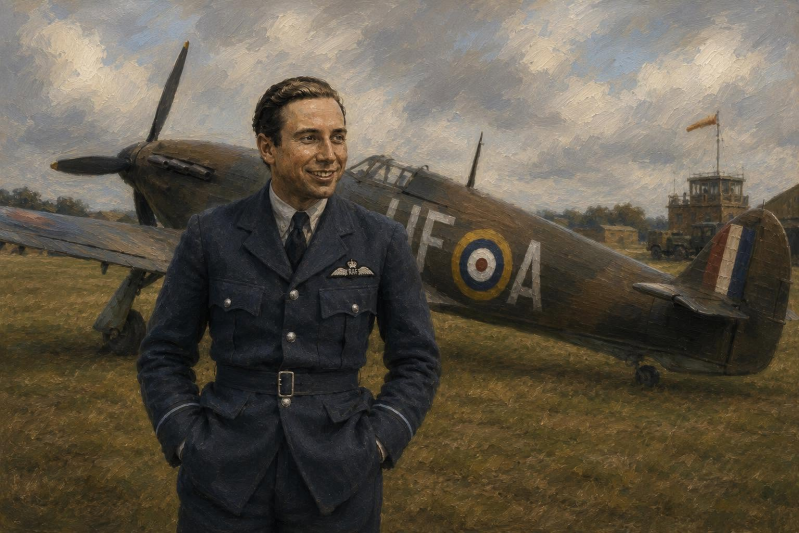
William "Billy" Fiske was a champion American sportsman who traded Olympic gold for a Royal Air Force cockpit. At just 16, he captained the US bobsled team to gold at the 1928 Winter Olympics, defending his title with another gold in 1932.
When World War II broke out, Fiske bypassed US neutrality by using a Canadian alias to enlist in the RAF. As a Pilot Officer with No. 601 Squadron, he flew Hawker Hurricanes during the Battle of Britain, operating out of RAF Tangmere and its satellite sector station, RAF Westhampnett.
On August 16, 1940, Fiske’s Hurricane was severely damaged by German bombers over Sussex. Despite his burning aircraft, he safely crash-landed at Tangmere, saving his fighter and airfield personnel. Tragically, he died from shock and severe burns the following day. Fiske remains a legendary figure at Westhampnett, honored as one of the first American aviators to give his life defending Britain.